Singapore’s Top Rated Torque Converter Repair Workshop
Torque Converter Specialists · Sin Ming AutoCity · All Makes and Models
That Shudder at 50km/h Is Not Your Tyres. It Is Your Torque Converter.
The torque converter is one of the most overlooked components in an automatic transmission. It sits between the engine and the gearbox, transfers power from one to the other, and works every single time you accelerate, decelerate, or come to a stop. Thousands of cycles every day. Hundreds of thousands over the life of the car.
When it starts to fail, the symptoms are specific and recognisable once you know what to look for. A shudder at a particular speed. A vibration under light throttle. Slipping that feels different from a gearbox slip. Overheating that comes and goes.
What most car owners do instead is assume it is a tyre issue, or a gearbox issue, or an engine mount issue. They get those things checked and find nothing wrong. Meanwhile the torque converter continues to degrade and the problem gets more expensive.
We diagnose torque converter faults correctly the first time, using brand-specific equipment. We fix what is actually wrong before it turns into a full transmission job.
Free diagnosis. Transparent pricing. Singapore’s longest warranty

What Customers Say About Us
What Is a Torque Converter and Why Does It Matter
Most car owners know they have an engine and a gearbox. The torque converter is what connects them.
In a conventional automatic transmission, the torque converter is a fluid coupling device that sits between the engine flywheel and the gearbox input shaft. It does three things simultaneously. It transmits engine power to the gearbox through hydraulic fluid. It multiplies torque at low speeds to make the car pull away smoothly from a standstill. And it allows the engine to keep running while the car is stationary without stalling, because the fluid coupling absorbs the mismatch between engine speed and gearbox speed.
Inside the torque converter is a lockup clutch, also called the torque converter clutch or TCC. At cruising speeds, this clutch locks the converter solid to eliminate the fluid slip and improve fuel efficiency. It is this lockup clutch that most commonly causes the shudder symptom that brings torque converter issues to an owner’s attention.
A torque converter is found in conventional automatic gearboxes. This covers most Mercedes, BMW, Volvo, Jaguar, Land Rover, Mazda, Toyota non-hybrid, and many other makes. It is not found in CVT-equipped cars, which use a belt-and-pulley system, nor in DSG or PDK dual clutch transmissions, which use mechanical clutch packs instead.
If you are unsure whether your car has a torque converter, WhatsApp us your make, model, and year. We will tell you immediately.
⚠️ A failing torque converter does not just cause a shudder. Left unaddressed, it contaminates the transmission fluid with friction material debris, spreads wear throughout the gearbox internals, and turns what should be a straightforward torque converter repair into a complete gearbox rebuild. The cost difference between addressing it early and addressing it late is significant.
How a Torque Converter Fails: The Symptoms to Watch For
Torque converter faults have a distinct symptom profile that differs from conventional gearbox wear. Knowing the difference helps you act at the right time.
Shuddering Between 40 and 70km/h
This is the most well-known torque converter symptom and the one that brings the most car owners to us. A shudder, vibration, or judder that occurs consistently at a specific speed range, usually somewhere between 40 and 70km/h under light to moderate throttle. It often feels like driving over a rumble strip even on a smooth road.
This is the torque converter lockup clutch engaging and slipping repeatedly rather than locking solidly. The friction material on the TCC has worn or the fluid has degraded to a point where smooth lockup is no longer possible. The shudder is the clutch chattering between engaged and disengaged states many times per second.
Vibration at Light Throttle on the Expressway
A subtler version of the shudder symptom. The car feels slightly rough or buzzy under light throttle at highway speed, then smooths out when you either lift off completely or accelerate more firmly. This is torque converter lockup clutch behaviour and is often the first sign that something is developing before the full shudder appears.
Slipping That Feels Different From a Gearbox Slip
Torque converter slip has a distinct quality compared to clutch pack or solenoid-related gearbox slip. It often feels like a brief surge or flare, where engine revs momentarily rise without a corresponding increase in vehicle speed, particularly when the converter should be locked at cruise speed. If you have been told your gearbox is slipping but a gearbox inspection found nothing obviously wrong, the torque converter lockup clutch is worth investigating.
Transmission Overheating
A failing torque converter generates significantly more heat than a healthy one because the fluid coupling is slipping when it should be locked. This excess heat raises transmission fluid temperature across the whole system. If your car is showing transmission temperature warnings without an obvious reason, torque converter condition is part of the diagnostic picture.
Contaminated Transmission Fluid
During a fluid check or service, if the transmission fluid is dark, smells burnt, or contains fine metallic particles or friction debris, the torque converter lockup clutch lining may be shedding material into the system. This contamination circulates through the entire gearbox and accelerates wear on every component it passes through. It is one of the more serious torque converter failure modes because the damage extends well beyond the converter itself.
Noise From the Torque Converter Area
A rattling, grinding, or whining noise from the torque converter housing, particularly at idle or low speed. Can indicate bearing wear, damage to the stator inside the converter, or mechanical failure of internal components. Noise from this area needs investigation before it develops further.
Coolant Contamination in the Transmission Fluid
Specific to certain BMW models including the X1 and 216, and can occur in other makes when the transmission oil cooler develops an internal leak. When coolant enters the transmission system it attacks every water-sensitive internal component including the torque converter. A flush does not fix this. The correct repair is a full gearbox rebuild including torque converter replacement and replacement of the autocooler that caused the contamination, plus a thorough cleaning of the cooling system. This is a more involved job but it is the only repair that actually solves the problem. Any workshop recommending a flush as the solution to coolant contamination is not giving you the full picture.
💡 Real talk: Torque converter repair done at the right time, when symptoms first appear and before contamination has spread, is a much more contained job than one carried out after months of driving on a failing converter. If your car is shuddering between 40 and 70km/h, come in for a free check. You might be pleasantly surprised by what the fix actually involves.
What the Repair Process Looks Like
Step 1: Free Diagnostic Scan and Symptom Assessment Brand-specific diagnostic equipment for your make and model. We read the transmission fault codes and assess the symptom pattern. For the shudder symptom specifically, the character, speed range, and conditions under which it occurs tell us a great deal about whether the torque converter is the primary culprit before we even lift the car. No charge. No obligation.
Step 2: Physical Inspection With the diagnostic data in hand, we inspect the transmission fluid condition. Colour, smell, consistency, and the presence of debris or contamination all provide information about what is happening inside the converter and the gearbox. This gives us the full picture before we commit to a repair scope.
Step 3: Transparent, Itemised Quote We tell you exactly what the repair involves, what parts are being replaced, and what it costs. Full breakdown. You approve before we start. No additions at collection. What we quote is what you pay.
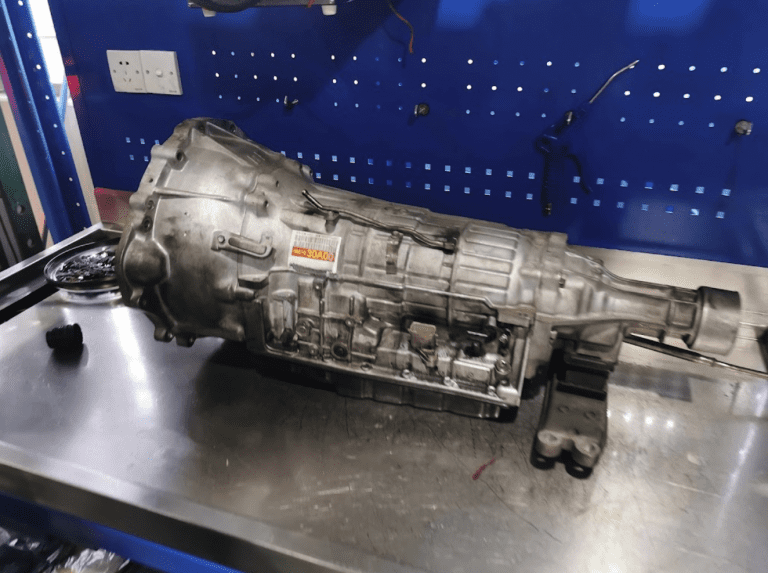
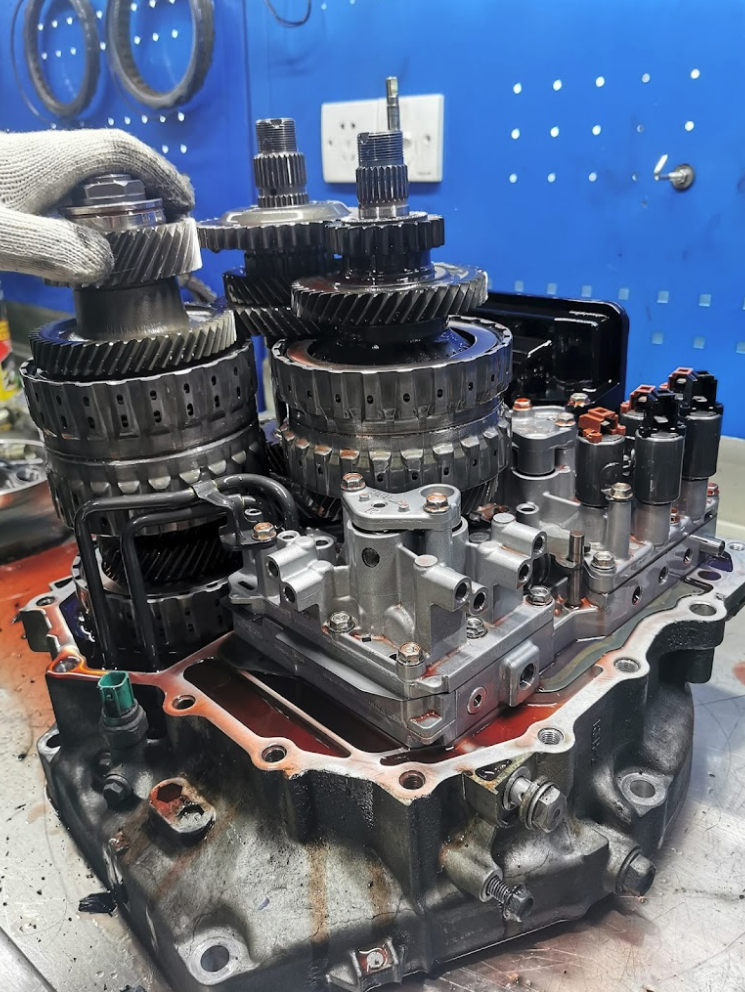
Step 4: Torque Converter Replacement and Transmission Service Gearbox removed. Torque converter replaced with a quality OEM-grade unit. Transmission fluid and filter replaced with correct-specification fluid for your exact model. If gearbox internal work is required due to contamination, this is carried out as part of the same job rather than requiring a second visit. Most jobs completed within 3 to 5 working days.
Step 5: Road Test and Verification Every car gets a proper road test after the repair to confirm the shudder is gone and the transmission is operating correctly across all speed and load conditions. Final diagnostic scan to confirm no fault codes remain. The car does not leave until it is right.
Step 6: Collect with Warranty Warranty issued at collection for a peace of mind
Schedule a Torque Converter Repair
Which Cars Are Most Commonly Affected
Torque converter faults occur across all makes and models fitted with conventional automatic transmissions. These are some of the cars we see most frequently for torque converter related work.
Mercedes-Benz The 7G-Tronic and 9G-Tronic automatic gearboxes fitted across the C-Class, E-Class, S-Class, GLC and other models. Torque converter shudder is a known concern on these units at higher mileage and is one of the more common reasons Mercedes owners come to us outside of standard gearbox wear.
BMW ZF 6HP and 8HP automatic gearboxes across the full model range. The specific coolant contamination issue on BMW X1 and 216 models always involves torque converter replacement as part of the correct repair. For other BMW models, torque converter lockup shudder develops in a similar pattern to other ZF-equipped cars as mileage accumulates.
Volvo Aisin-Warner and ZF automatic gearbox units across the XC90, XC60, S60, S80, V60, V40, V70 and other models. XC90 shudder complaints are among the more common Volvo torque converter presentations we see.
Jaguar and Land Rover ZF 8HP automatic units. Torque converter lockup shudder is not uncommon on higher mileage Discovery, Range Rover, and Jaguar XF and XE models.
Toyota Conventional automatic gearbox models outside the hybrid range. The Camry, older Corolla platforms, Fortuner, and Alphard among others. Hybrid models use an eCVT which operates differently and does not have a conventional torque converter.
Mazda SKYACTIV-Drive 6-speed automatic across the Mazda 2, 3, 6, CX-3, CX-5 and CX-8. Torque converter lockup shudder has been documented across various SKYACTIV-Drive applications and is something Mazda owners report on forums frequently before they know what it is.
Honda Conventional automatic gearbox models. The Accord, CR-V with torque converter automatic, Odyssey, and other Honda models not fitted with a CVT.
Other Makes Torque converter faults occur across any car fitted with a conventional automatic gearbox. This includes Nissan models with AT rather than CVT, Hyundai and Kia models with conventional automatics, Maserati, Bentley, Rolls-Royce, and other premium and luxury brands using ZF-derived units.
Not sure whether your car has a torque converter automatic or a different transmission type? WhatsApp us your make, model, and year. We will confirm immediately.
Why Singapore’s Car Owners Choose 1 Car for Torque Converter Repair
We Diagnose the Actual Fault.
Torque converter shudder is frequently misdiagnosed as a tyre issue, engine mount problem, or gearbox fault. We have the brand-specific diagnostic equipment and the hands-on experience to identify torque converter faults correctly the first time. You do not pay for the wrong repair because we do not recommend the wrong repair.
We Tell You the Full Picture Before We Start.
If a failing torque converter has contaminated the transmission fluid and spread debris through the gearbox, the gearbox also needs attention. We tell you this during diagnosis, explain what it means, and give you a complete itemised quote for the full scope of work. No surprises at collection.
We Know When a Gearbox Overhaul Is Also Needed.
And we know when it is not. If the torque converter has failed in isolation without contaminating the system, we say so and quote accordingly. If the damage has spread, we tell you that too. You get an honest assessment, not the most profitable one.
Transparent Pricing. No Exceptions.
Full itemised quote before work starts. What we quote is what you pay. This applies to every job regardless of make, model, or complexity.
Original and OEM-Grade Parts Throughout.
Torque converter replacement units and all associated transmission components are original manufacturer parts or OEM-grade equivalents. The quality of the replacement determines how long the repair lasts. We do not use cheap aftermarket converters and we do not cut corners on the fluid specification.
Free Diagnosis. Free Towing. No Hard Sell.
Drive in and we assess your car for free. If it cannot make it safely, we can arrange towing to our workshop. You get the full honest picture before you commit to anything.
2,000+ Transmission Jobs Completed.
We have seen every variation of torque converter failure across every major make and model on Singapore roads. The diagnostic process, the repair scope, and the correct parts for each application are well understood. You are not a test case.
Questions People Ask About Torque Converter Repair in Singapore
What does a torque converter repair actually involve?
In most cases it means replacing the torque converter unit rather than repairing the existing one. The gearbox has to be removed to access it. Once the converter is replaced, the transmission fluid and filter are also replaced with fresh correct-specification fluid. If the failing converter has contaminated the transmission system with friction debris, the gearbox internals may also need attention as part of the same job. We diagnose first and tell you exactly what your car needs before quoting anything.
How do I know if my car has a torque converter?
Torque converters are found in conventional automatic gearboxes. If your car is a non-hybrid automatic and it is not a DSG, CVT, or PDK equipped model, it almost certainly has a torque converter. Practically speaking: most Mercedes with 7G or 9G-Tronic, most BMW with ZF automatics, most Volvo, Jaguar, Land Rover, Mazda SKYACTIV-Drive, Toyota non-hybrid automatics, and Honda non-CVT automatics all have conventional torque converters. WhatsApp us your make, model, and year if you are not sure.
My car shudders between 40 and 70km/h. Is it the torque converter?
That speed range and symptom pattern is very characteristic of torque converter lockup clutch shudder. It is not the only possible cause but it is the most common one. Come in for a free diagnostic check. We assess the symptom pattern, scan the transmission fault codes, and check the fluid condition. That combination tells us whether the torque converter is the culprit before we recommend any repair.
How much does a torque converter repair cost in Singapore?
It depends on the make, model, and whether the torque converter failure has caused any associated gearbox damage. A standalone torque converter replacement with a transmission fluid service is a more contained job than one that includes a gearbox overhaul. We confirm the exact cost after the free diagnostic scan. WhatsApp us your make, model, and symptoms for a realistic ballpark before you come in.
Can I just do a transmission fluid flush instead?
For early-stage torque converter shudder where the TCC is beginning to slip but has not yet shed debris into the system, a fluid change with fresh correct-specification fluid sometimes resolves or significantly reduces the shudder. We assess this during diagnosis and will tell you honestly if a fluid service is a reasonable first step for your specific situation. If the converter has already contaminated the fluid with friction material, a flush does not solve the problem. It moves contaminated fluid around the system and delays the inevitable.
My BMW X1 has coolant in the transmission fluid. Is the torque converter involved?
Yes. Coolant contamination in a BMW X1 or 216 transmission comes from the autocooler leaking internally. When coolant gets into the transmission system it damages every water-sensitive internal component. The torque converter is among them. The correct repair is a full gearbox overhaul with torque converter replacement and autocooler replacement, plus a proper clean of the cooling circuit. A flush will not fix this. We have seen many X1 owners come to us after paying for a flush elsewhere that did not solve the problem. Come in for a free diagnostic check and we will give you the honest picture.
How long does a torque converter repair take?
Most jobs are completed within 3 to 5 working days. We confirm the timeline after the diagnostic scan. If gearbox internal work is also required the timeline reflects that. We update you throughout so you can plan around the downtime.
What warranty do I get on the torque converter repair?
Where torque converter replacement is carried out alongside a full gearbox overhaul, our 2-year / 40,000km warranty applies, the longest available in Singapore. For standalone torque converter replacement work, we confirm the applicable warranty in your quote before work begins. All warranty terms are clear before you commit to anything.
My car cannot drive. Can you tow it in?
Yes. If your car has lost drive, is overheating, or is in limp mode, do not push it further. WhatsApp us and we will arrange towing to our workshop at Sin Ming AutoCity.
Another workshop said I need a new gearbox. Could it just be the torque converter?
Possibly. Torque converter symptoms are sometimes misdiagnosed as requiring a full gearbox replacement. Come in for a free diagnostic check before committing to anything. If the fault is isolated to the torque converter and the gearbox internals are in good condition, we will tell you that. If a gearbox overhaul is genuinely needed, we will explain exactly why. You get the honest picture either way.